
Is your product fully designed and ready to launch, apart from the small detail that it isn’t CE marked yet? Or are you not even sure whether it needs a CE mark at all? You’ve come to the right place. This guide walks you through the CE marking process step by step.
The short version:
-
The CE mark shows that the manufacturer declares the product meets EU requirements.
-
You are responsible for the assessment yourself, though in some cases a notified body is required.
-
Marking the product is the last step, not the first.
What is CE marking, and who is responsible?
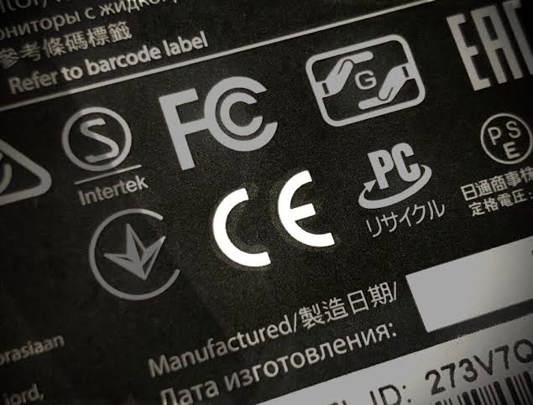
The CE mark shows that a product meets the requirements of the EU legislation that applies to it. It isn’t a quality seal, and it isn’t a certificate issued by an authority. The manufacturer declares that the product is compliant and can be held accountable if it isn’t.
So responsibility lies primarily with the manufacturer, but importers and distributors have obligations too. Among other things, they must check that a product is CE marked and comes with the right documentation before they sell it on. If you import products from outside the EU, you can effectively take on the manufacturer’s responsibilities.
Step 1: Determine whether your product needs a CE mark
Not every product needs CE marking. The requirement only applies to product categories covered by specific EU legislation, such as machinery, electrical equipment, radio equipment, toys, personal protective equipment, construction products and medical devices.
Start by asking yourself:
-
What is the product, and how is it used?
-
Does it fall into a category covered by CE legislation?
-
Are there any exemptions within that category?
That last question is easy to forget. Each piece of legislation has its own scope and its own exemptions, so always read the EU article on what is and isn’t covered before moving on.
If your product isn’t covered by any such legislation, it must not be CE marked either. The mark isn’t something you can add “just to be safe.”
Step 2: Identify the applicable legislation
Many products are covered by several pieces of legislation at once. A connected electronic product, for example, may fall under the Radio Equipment Directive (RED), the EMC Directive and the Low Voltage Directive all at the same time. You must meet all of them, and the CE mark covers them all together.
A common mistake is overlooking one of them. Go through your product’s characteristics systematically: Does it contain electronics? Does it have a radio transmitter? Does it move? Does it contain batteries? Each answer can bring additional requirements.
Coming up: On 20 January 2027, the EU Machinery Regulation becomes fully applicable and replaces the Machinery Directive. CE marking remains in place, but if your product is a machine, you’ll need to follow the new regulation from that date. Among other things, it sets clearer requirements for software, connectivity and modifications to machinery.
Step 3: Find out the requirements and applicable standards
The legislation sets out essential requirements but doesn’t say exactly how to meet them. That’s where harmonised standards come in. If you follow a harmonised standard published in the Official Journal of the European Union (where the EU publishes its legal acts), you get what’s called a presumption of conformity. Put simply, your product is presumed to meet the requirements.
You can choose not to use the standards, but then you’ll have to demonstrate in some other way that your product is safe and compliant, which is often more work.
Step 4: Choose a conformity assessment procedure
Now you need to decide how you’ll show that your product meets the requirements. There are essentially two routes:
-
Self-assessment: You, as the manufacturer, carry out the assessment yourself. This applies to many lower-risk products.
-
Notified body: An independent body approved by EU member states must examine or test the product. This is often required for higher-risk products.
The applicable legislation will tell you which route applies. In some cases you can choose between several options, and then it’s worth comparing cost, time and risk.
Step 5: Test and assess the product
This is where you carry out the actual assessment. It usually involves:
-
a risk analysis, identifying the hazards of the product and how they are addressed
-
testing and measurements against the applicable requirements and standards
-
verification that products in series production match the one that was tested
Keep everything, as it forms the basis for the next step.
Step 6: Prepare the technical documentation
The technical documentation is your proof that you’ve done the work. It typically includes:
-
a product description and design documentation
-
the risk analysis
-
test reports and the standards applied
-
user instructions and labelling
-
any certificates from a notified body
The documentation must be available to market surveillance authorities on request and should normally be kept for at least ten years after the product is placed on the market. The exact period and contents vary between pieces of legislation, so check what applies to your product.
Step 7: Draw up the declaration of conformity and affix the CE mark
Only now is it time for the marking itself. You draw up an EU Declaration of Conformity, a document in which you declare that the product meets the requirements. It includes, among other things:
-
the manufacturer’s name and address
-
identification of the product (type, model, serial number)
-
the legislation and standards applied
-
details of any notified body involved
-
signature and date
Then you affix the CE mark to the product. It must be:
-
visible, legible and indelible
-
at least 5 mm high, unless the legislation specifies otherwise
-
accompanied by the manufacturer’s name and address and an identification of the product, so that it can be traced
If a notified body has been involved, its identification number must follow the CE mark.
Common mistakes
-
Thinking the CE mark is a certificate issued by someone else.
-
Missing a piece of legislation that also applies to the product.
-
Incomplete technical documentation, or failing to update it when the product changes.
-
Assuming a supplier’s CE marking of a component covers the finished product. Whoever assembles and sells the final product is responsible for the whole.
-
Starting at the wrong end and marking the product before the assessment is done.
Keep in mind that CE marking isn’t a one-off task. If you change the product, or the legislation changes, you may need to redo parts of the assessment.